


Nutrition is not only about calories, protein, carbohydrates, fats, fruits and vegetables. Micronutrients such as vitamins and minerals are equally important for supporting growth, development, blood formation, immunity and overall health. However, many people may still have gaps in essential micronutrient intake, even when enough food is available. This is where food fortification plays an important role by adding selected vitamins and minerals to commonly consumed foods. According to the World Health Organization (WHO), food fortification can improve the nutritional quality of foods and help address micronutrient deficiencies as part of a broader public-health nutrition strategy.
Quick Overview
Food fortification is designed to make commonly consumed foods a useful vehicle for essential vitamins and minerals. Its main purpose is to help prevent, reduce, or control micronutrient deficiencies at a population or targeted-group level. When appropriately planned and monitored, it can complement a balanced diet and other nutrition programmes.
What Is Food Fortification?
Food fortification is the process of adding essential vitamins and minerals to foods to improve their nutritional value. Nutrients such as iron, iodine, folic acid, vitamin A, vitamin D, and zinc may be added depending on the nutritional needs and purpose of the food.
Iodized salt is a familiar example, while rice, wheat flour, edible oils, milk, and other commonly consumed foods can also be used as food vehicles. Effective fortification requires careful consideration of the nutrient, amount added, food type, consumption patterns, and population needs.
Explore = What is Food Fortification and Examples
What Is the Purpose of Food Fortification?
The main purpose of food fortification is to help improve micronutrient intake and address nutritional deficiencies that can affect public health. It works as part of a broader nutrition strategy rather than replacing a balanced diet.
1. Helping Address Micronutrient Deficiencies
Essential nutrients such as iron, iodine, vitamin A, and folate support important functions in the body. When dietary intake is inadequate, fortification can provide an additional source of these nutrients and help reduce the risk of deficiencies.
2. Reaching People Through Everyday Foods
Fortification can deliver nutrients through foods people already consume regularly. Common food vehicles include salt, rice, wheat flour, oils, fats, and milk. This can make it easier to improve micronutrient intake without requiring major changes to everyday eating habits.
3. Supporting Public Health Nutrition
When a deficiency affects a significant population, appropriately planned fortification can become part of a wider public-health nutrition programme. The approach may be designed for the general population or specific groups depending on nutritional needs.
4. Restoring Nutrients During Processing
Some food-processing methods can reduce certain nutrient levels. Fortification may help restore selected nutrients and improve the nutritional profile of the finished food. The exact approach depends on the food, processing method, and applicable standards.
5. Complementing a Balanced Diet
Fortified foods are not a replacement for a varied and nutritious diet. They are one tool that can help improve micronutrient intake alongside healthy eating, supplementation where appropriate, and other nutrition interventions. WHO recommends viewing fortification as part of a comprehensive approach to addressing micronutrient deficiencies.
What Are the Different Types of Food Fortification?
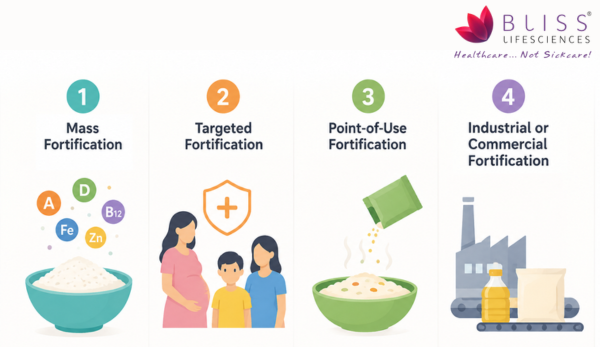
Food fortification can be designed in different ways depending on the nutritional need, target population, and food being used. The main approaches include:
1. Mass Fortification
Mass fortification adds selected vitamins and minerals to foods that are commonly consumed by the general population. Iodized salt is a well-known example, as it can help increase iodine intake across a population.
2. Targeted Fortification
Targeted fortification focuses on specific groups who may have greater nutritional needs or a higher risk of deficiencies. Foods can be specially fortified for groups such as children, pregnant women, or other identified populations.
3. Point-of-Use Fortification
With point-of-use fortification, micronutrients are added to food shortly before it is eaten rather than during large-scale food production. This approach can be useful when nutrients need to be delivered to specific individuals or groups.
4. Industrial or Commercial Fortification
In this approach, nutrients are added during food manufacturing under controlled conditions. Depending on the product and regulations, foods such as rice, wheat flour, milk, and edible oils may be fortified during production.
Each approach has a different purpose, and the most suitable method depends on factors such as dietary patterns, nutritional requirements, food-processing conditions, and applicable standards.
Which Nutrients Are Commonly Used in Food Fortification?
The nutrient selected depends on the food, population requirements, technical feasibility, regulations, and the specific deficiency being addressed.
| Nutrient | Example nutritional role | Food fortification example |
| Iron | Supports normal blood formation and oxygen transport | Wheat flour, rice, salt in certain programmes |
| Iodine | Needed for thyroid hormone production | Salt |
| Vitamin A | Important for vision, immune function and normal development | Edible oils and other food vehicles |
| Vitamin D | Helps regulate calcium and supports bone health | Milk and other foods |
| Folic acid | Important for DNA synthesis and cell division | Wheat flour in relevant fortification programmes |
| Zinc | Supports normal immune and cellular functions | Selected fortified foods |
These are general examples, and actual fortification levels depend on the food product and applicable national standards. In India, FSSAI regulates fortified foods, including rice, wheat flour, milk, edible oils, and double-fortified salt.
Food Fortification vs. Supplements: Are They the Same?
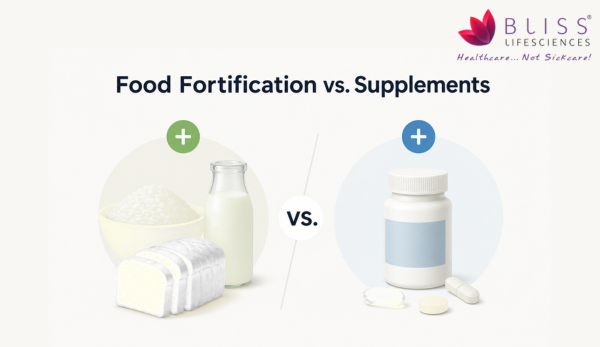
No. Both can help improve micronutrient intake, but they work differently. Supplements provide nutrients through products such as tablets, capsules, powders, or liquids, while food fortification adds selected nutrients directly to foods.
The right approach depends on the nutritional need, target population, dietary habits, and public-health strategy. In some cases, fortification can reach people through foods they already consume, while supplements may be more suitable for specific groups or individual needs. Both approaches can also work together.
Is Food Fortification Safe?
When properly designed and regulated, food fortification can be an important tool for improving micronutrient intake. However, adding nutrients is not simply a case of “more is better.” Fortification levels must consider factors such as nutrient needs, consumption patterns, bioavailability, and potential excessive intake.
WHO recommends appropriate monitoring and quality control throughout fortification programmes. In India, the Food Safety and Standards (Fortification of Foods) Regulations, 2018 provide a regulatory framework for fortified foods through FSSAI.
Consumers should therefore look for products that follow applicable standards rather than relying only on general nutritional claims.
What Role Does Food Fortification Play in India?
In India, food fortification is one approach used to help address micronutrient gaps through commonly consumed foods. Fortified products include rice, wheat flour, milk, edible oil, and double-fortified salt.
Depending on the product, nutrients such as iron, iodine, zinc, and vitamins A and D may be used. Effective fortification involves more than nutrient addition it also requires proper formulation, quality control, labelling, monitoring, and regulatory compliance.
For organisations such as Bliss Life Sciences, these factors are important when developing responsible and standards-aligned food fortification solutions.
How Can Consumers Identify Fortified Foods?
Consumers can check the product label for information about added nutrients and fortification. In India, FSSAI uses the “+F” logo to help identify fortified foods.
However, a fortified label does not automatically make a product nutritionally complete. It is still important to consider the food’s overall profile, including its levels of sugar, salt, fat, calories, and other nutrients.
What Does the Future of Food Fortification Look Like?
The future of food fortification is likely to focus on better targeting, improved technology, stronger quality control, and evidence-based nutrition strategies.
Successful programmes need to consider who is most at risk of deficiencies, which foods reach them, nutrient stability during processing and storage, and how fortification fits alongside other nutrition initiatives.
This makes modern food fortification much more than a food-processing technique. It brings together nutrition science, food technology, public health, regulation, quality assurance, and consumer awareness to create practical approaches to improving nutritional intake. recent research on food fortification in India .
Explore = The Future of Food Fortification: Trends and Innovations
Frequently Asked Questions
1. Why is food fortification important?
It can help improve micronutrient intake through foods people already consume regularly, making it a useful part of broader nutrition strategies.
2. What foods are usually fortified?
Commonly fortified foods include salt, rice, wheat flour, milk, edible oils, and maize flour, depending on local nutritional needs and regulations.
3. Why is food fortification important in India?
In India, fortification is one approach used to help address micronutrient gaps through commonly consumed foods, under standards and regulations established by FSSAI.
4. Can food fortification be used in processed foods?
Yes.Selected processed foods can be fortified when the food is a suitable vehicle and the formulation meets relevant nutritional, technical, and regulatory requirements.
5. Why is quality control important in food fortification?
Quality control helps ensure that the intended nutrients are present at the appropriate levels and that the finished product consistently meets applicable food-safety and quality standards.
Final Thoughts
Food fortification is a practical way to improve micronutrient intake through foods people already consume. When supported by sound nutrition science, proper formulation, quality control, and regulatory standards, it can play a valuable role in addressing nutritional gaps.
However, fortified foods should complement, not replace, a balanced diet. With evidence-based approaches and responsible implementation, food fortification can continue to support better nutrition and public health.